
Vestibular Evoked Myogenic Potential
VEMP testing records muscle responses produced after sound stimulation and provides information about specific pathways of the vestibular system.
Vestibular Assessment
Objective Response
Advanced Equipment
Expert Audiologists
About Vestibular Evoked Myogenic Potential
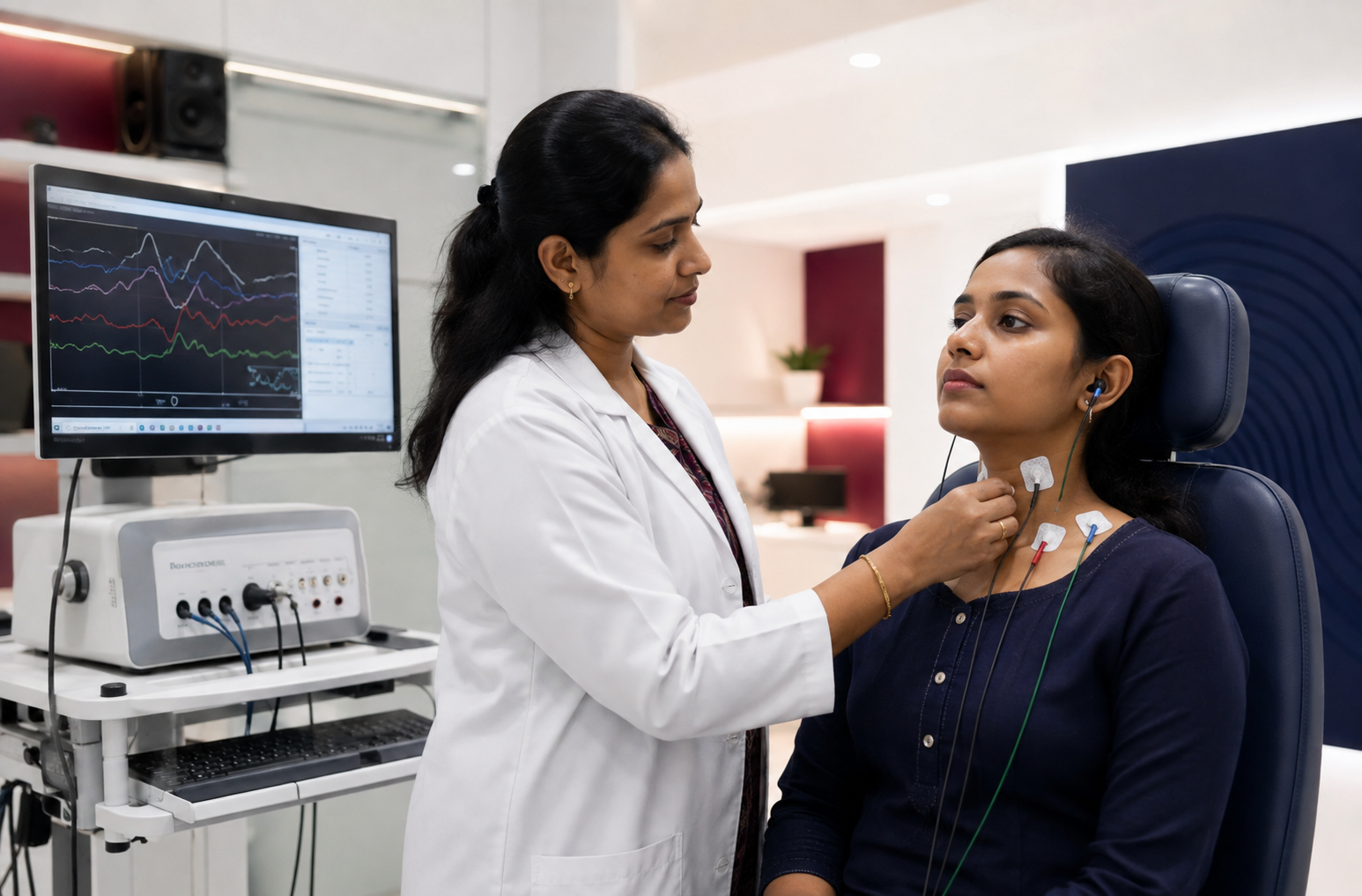
Vestibular Evoked Myogenic Potential testing records reflex muscle responses that occur after controlled stimulation of the vestibular system. Two commonly used measurements are cervical VEMP (cVEMP), recorded from muscles in the neck, and ocular VEMP (oVEMP), recorded from muscles near the eyes. These responses provide information about otolith-related vestibular pathways and are interpreted together with symptoms, clinical examination and other vestibular tests.
How It Works
Preparation
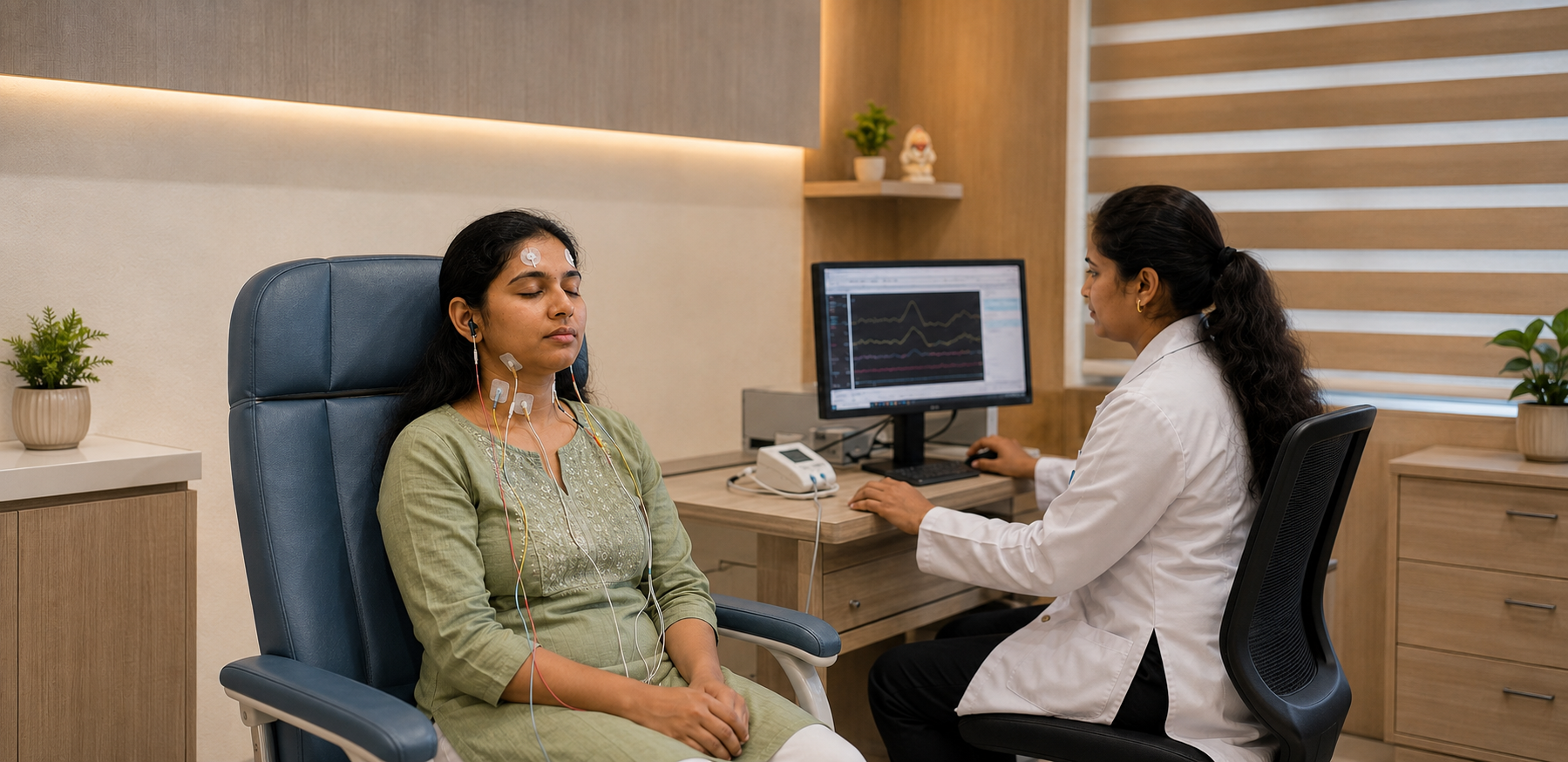
Small surface electrodes are positioned on the skin around the neck or eye area depending on whether cVEMP or oVEMP is being measured.
Controlled Stimulation
Calibrated sound or vibration stimuli are presented using appropriate equipment to activate the vestibular reflex pathway being assessed.
Muscle Response Recording
The electrodes record small electrical responses from the activated neck or eye muscles while the test is performed.
Result Interpretation
Response timing, amplitude and symmetry are reviewed and interpreted together with other balance and vestibular assessment findings.
Benefits of Vestibular Evoked Myogenic Potential
Objective Vestibular Data
Records physiological muscle responses related to vestibular stimulation.
Otolith Assessment
Provides information about otolith-related vestibular pathways.
cVEMP & oVEMP
Different VEMP recordings can assess complementary vestibular reflex pathways.
Balance Evaluation
Adds useful information to a broader vestibular and balance assessment.
Clinical Guidance
Helps clinicians interpret vestibular findings together with other relevant tests.