
Puducherry | Cuddalore | Villupuram

Hearing Loss

Hearing loss is more common than many people realise. Understanding its possible signs, causes and different types can help you take appropriate steps towards professional hearing care and better communication.

South Indian audiologist explaining a hearing assessment to an older woman

About Hearing Loss

Hearing loss means reduced ability to hear sounds compared with normal hearing. It may affect one ear or both ears and can range from mild to profound. Hearing loss can occur at any age, and the appropriate care depends on its cause, type, severity and individual communication needs.

Affects people of all ages

Can be mild, moderate or severe

May affect one or both ears

Early care makes a difference

Common Signs of Hearing Loss

  • Difficulty hearing in noisy environments
  • Frequently asking people to repeat themselves
  • Turning up the TV, radio or phone volume
  • Trouble following conversations
  • Feeling that other people sound unclear or muffled
  • Ringing or buzzing in the ears
Understanding Your Hearing

How Hearing Works

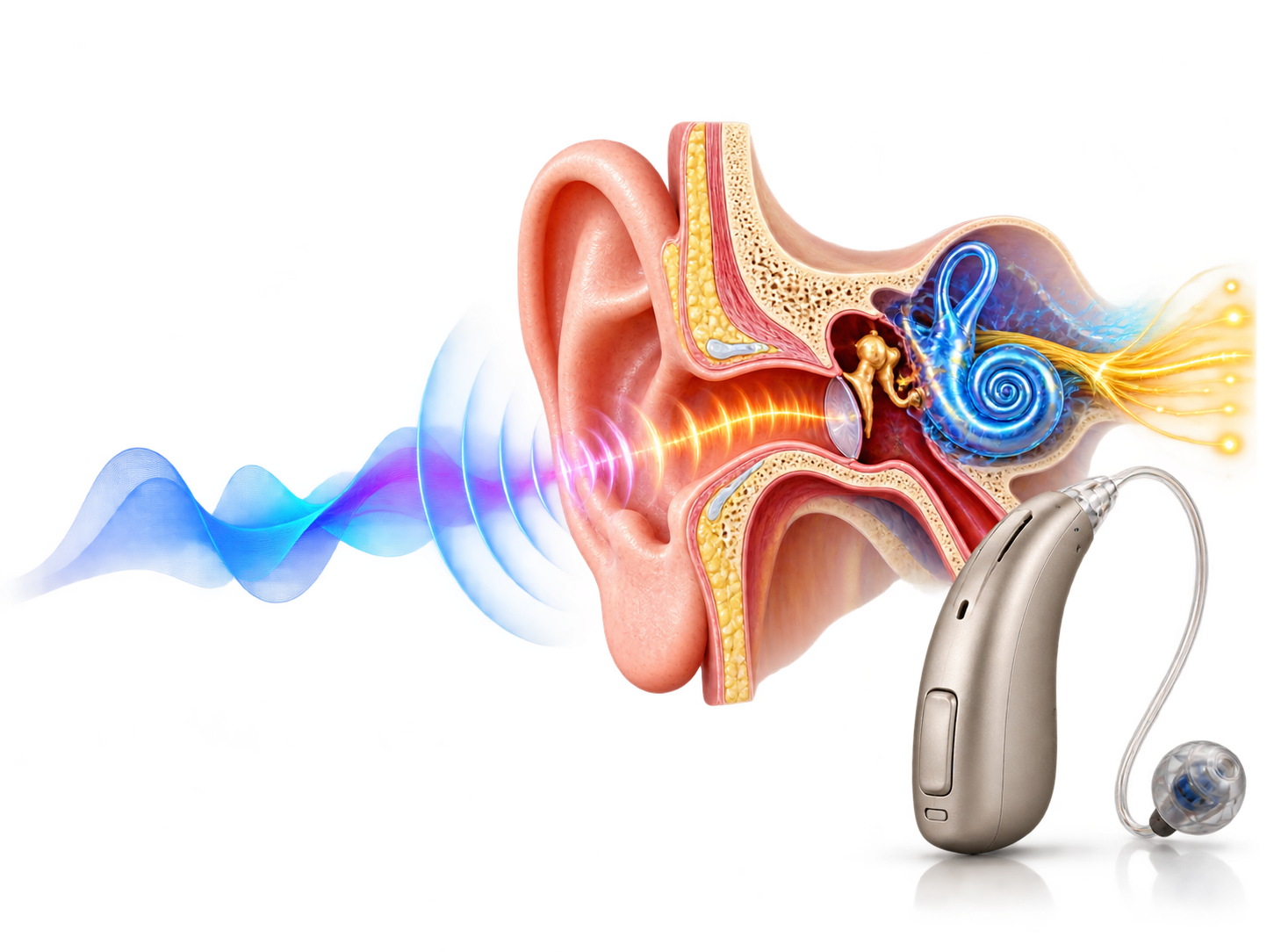
Hearing happens through a connected pathway. Sound is collected by the outer ear, transferred through the middle ear and converted into signals inside the inner ear before reaching the brain.

01

Outer Ear

The visible ear collects sound and directs it through the ear canal toward the eardrum.

02

Middle Ear

The eardrum and tiny middle-ear bones transfer and amplify sound vibrations toward the inner ear.

03

Inner Ear

The cochlea converts sound vibrations into electrical signals that the auditory system can use.

04

Auditory Nerve & Brain

The signals travel through the auditory nerve to the brain, where they are interpreted as sound.

Types of Hearing Loss

Conductive Hearing Loss

Occurs when sound transmission through the outer or middle ear is reduced.

Sensorineural Hearing Loss

Involves the inner ear, sensory cells or auditory nerve pathways.

Mixed Hearing Loss

A combination of conductive and sensorineural hearing loss.

Central Auditory Difficulty

Difficulties can also occur in how auditory information is processed within the nervous system.

Causes of Hearing Loss

Aging

Age-related changes can affect hearing.

Noise Exposure

Repeated loud sound can damage hearing.

Ear Infections

Ear disease or infection may affect hearing.

Genetics

Genetic factors can contribute to hearing loss.

Earwax Buildup

Impacted earwax can block sound transmission.

Certain Medicines

Some medicines can affect hearing.

Medical Conditions

Some health conditions are associated with hearing loss.

Head or Ear Injury

Trauma may damage structures involved in hearing.

Quick Hearing Self-Check

Do Any of These Situations Feel Familiar?

These everyday situations can be useful signs that it may be time to arrange a professional hearing assessment.

This checklist is for awareness only and does not replace a professional hearing test.
Do you frequently ask people to repeat themselves?
Do you find conversations difficult in noisy places?
Is the television volume higher than others prefer?
Do people sometimes seem to mumble or sound unclear?
Is hearing on the telephone becoming difficult?
Do you miss parts of group conversations?
Do you find some voices harder to understand?
Do you experience persistent ringing or buzzing?
If several of these situations are familiar,

a professional hearing assessment can help identify whether hearing loss may be present.

Book a Hearing Test