
Newborn Hearing Screening
Newborn hearing screening helps identify babies who may need further hearing assessment, supporting timely follow-up and early hearing-care guidance.
Baby-Friendly Screening
Quick Assessment
Early Hearing Check
Professional Care
About Newborn Hearing Screening
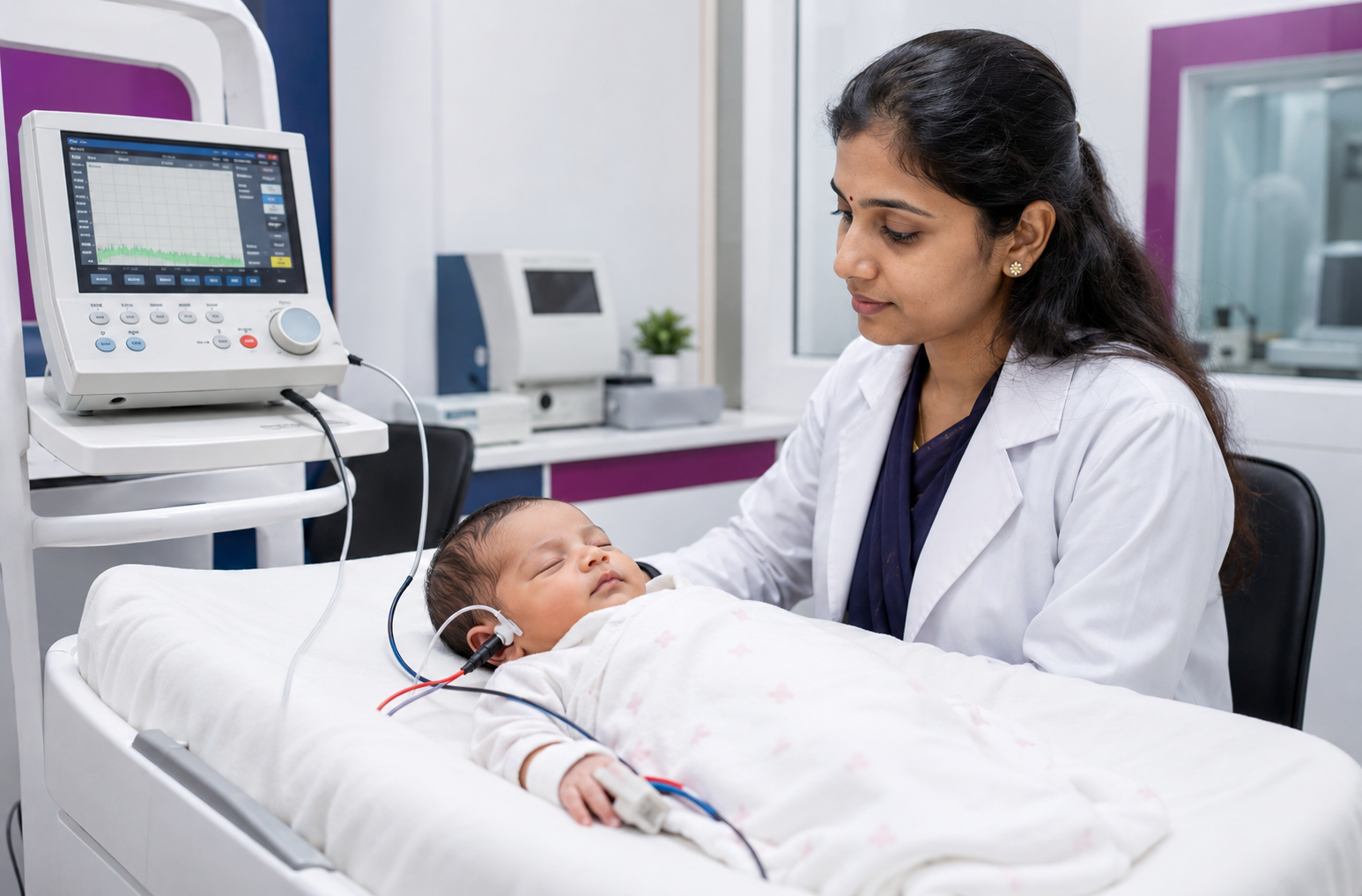
Newborn hearing screening is designed to check a baby's hearing shortly after birth and identify babies who may require a more complete hearing evaluation. Depending on the screening protocol, methods such as Otoacoustic Emissions (OAE), Automated Auditory Brainstem Response (AABR), or a combination of both may be used. The screening is generally brief and babies can often remain resting or sleeping while it is performed.
How It Works
Baby Is Made Comfortable
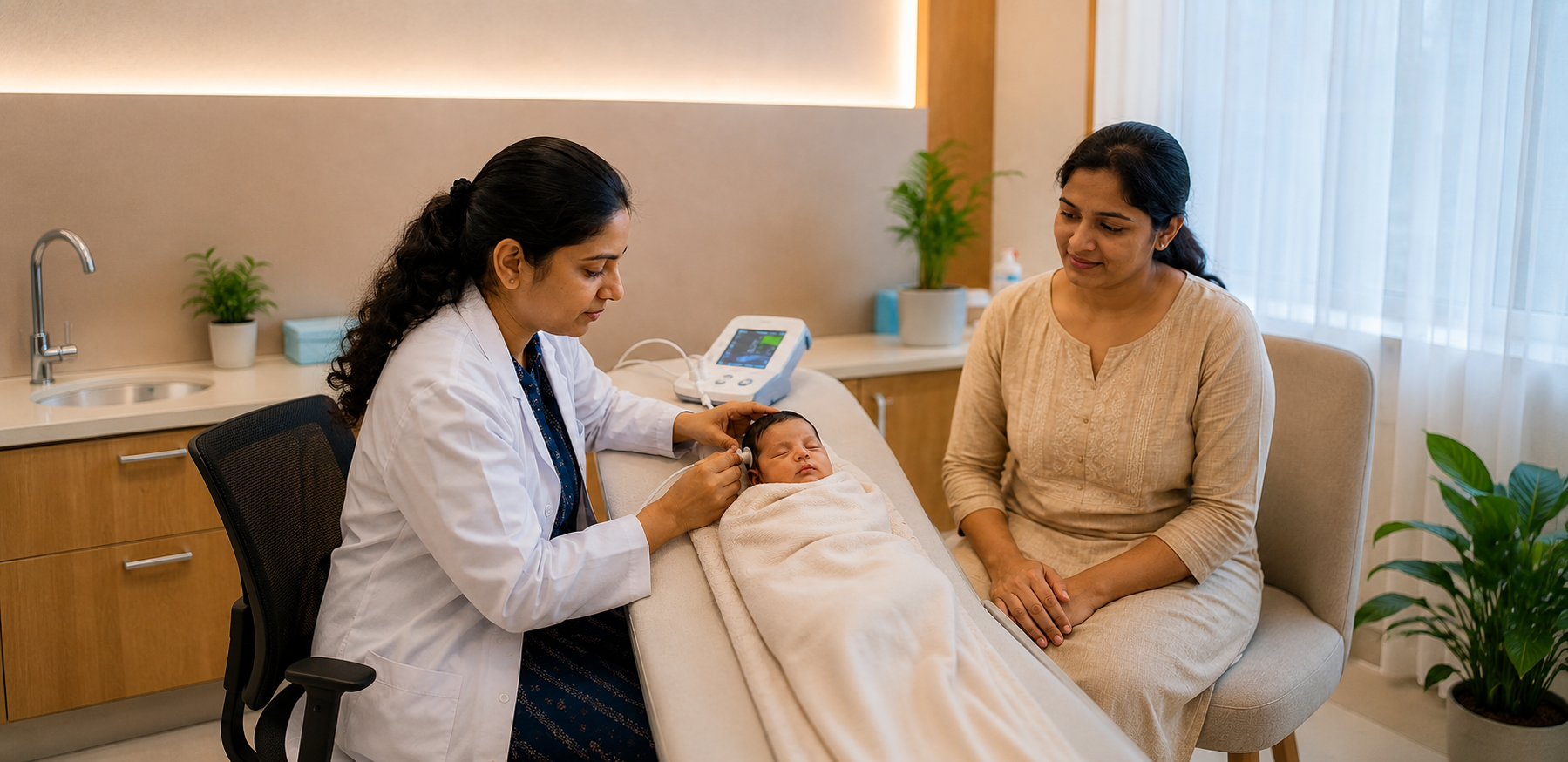
The screening is usually easiest when the baby is calm, resting or sleeping in a quiet environment.
Hearing Screening
Depending on the screening method, a small ear probe or soft earphones and sensors may be used to measure the baby's response to sound.
Response Recording
The equipment automatically records the hearing-screening response without requiring the baby to give a behavioural response.
Results & Follow-Up
The screening result is reviewed. If the baby does not pass the screening, additional hearing testing should be arranged promptly with an audiologist.
Benefits of Newborn Hearing Screening
Early Identification
Helps identify babies who may require additional hearing assessment.
Quick Screening
Newborn hearing screening can usually be completed within a short time.
Objective Response
Screening equipment records responses without behavioural feedback.
Timely Follow-Up
Screening results help identify babies who need further audiological testing.
Communication Support
Early identification can support timely access to communication services.