Introduction
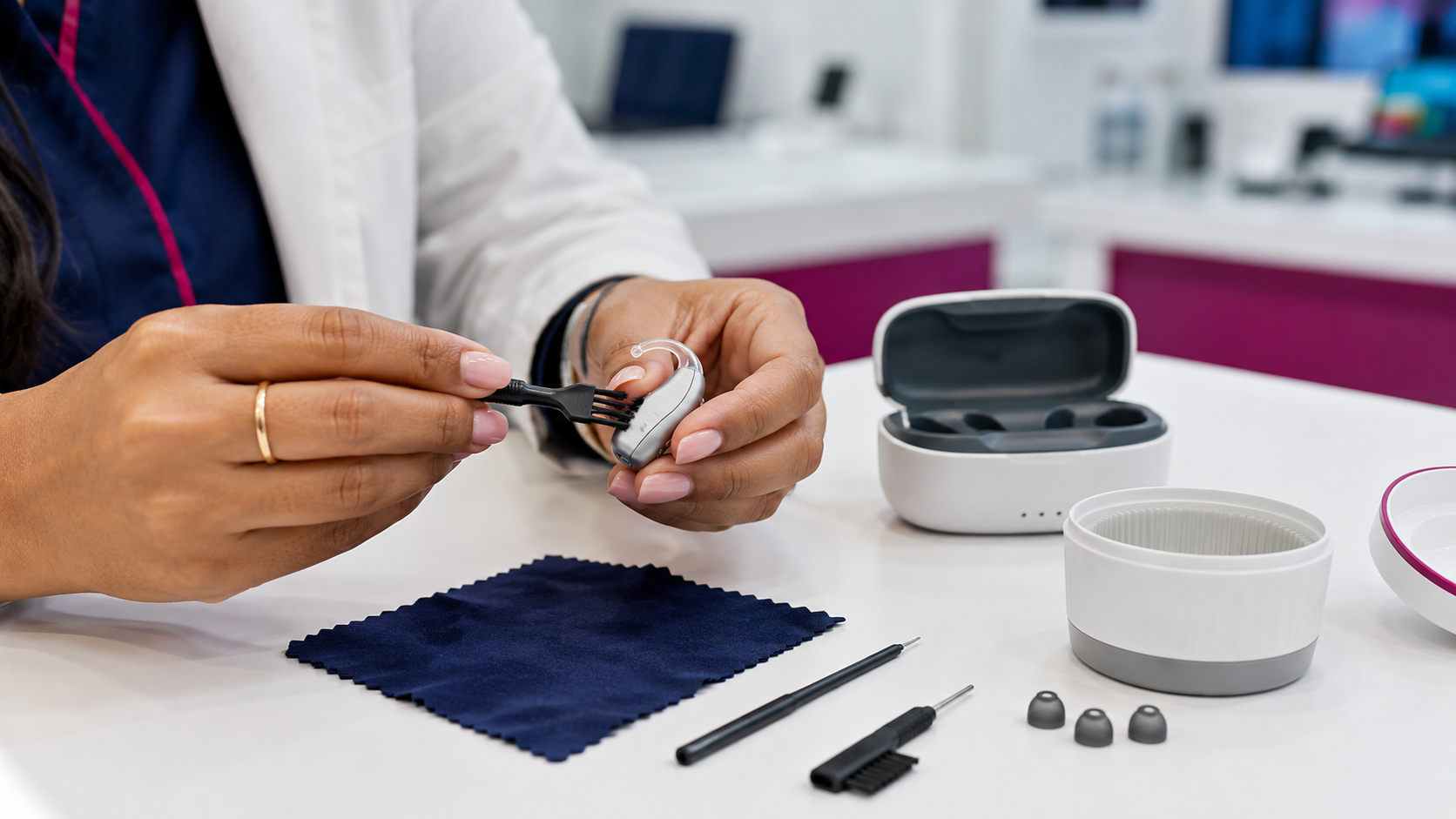
Hearing aids are small electronic devices that are used throughout the day and are regularly exposed to earwax, skin oils, dust and moisture. A simple care routine can help keep microphones, receivers, domes, earmoulds and charging contacts cleaner and may help maintain more consistent day-to-day performance. Always follow the cleaning and maintenance instructions supplied for your specific hearing aid model.
1. Why Is Hearing Aid Maintenance Important?
Regular maintenance helps prevent common problems such as blocked sound outlets, weak sound, charging difficulties and moisture-related performance issues. Hearing aids contain small openings and delicate electronic components, so cleaning should be gentle and limited to the methods recommended for the device. If a hearing aid continues to perform poorly after basic cleaning and charging checks, professional inspection is the safer next step.
2. Daily Hearing Aid Maintenance Tips
3. When Should Hearing Aids Be Professionally Serviced?
Arrange professional support if the hearing aid becomes weak, distorted or intermittent, does not charge normally, has visible damage or continues to have problems after routine cleaning. A hearing care professional can inspect the device, clean areas that are not intended for home maintenance and check whether parts, accessories or programming need attention.