
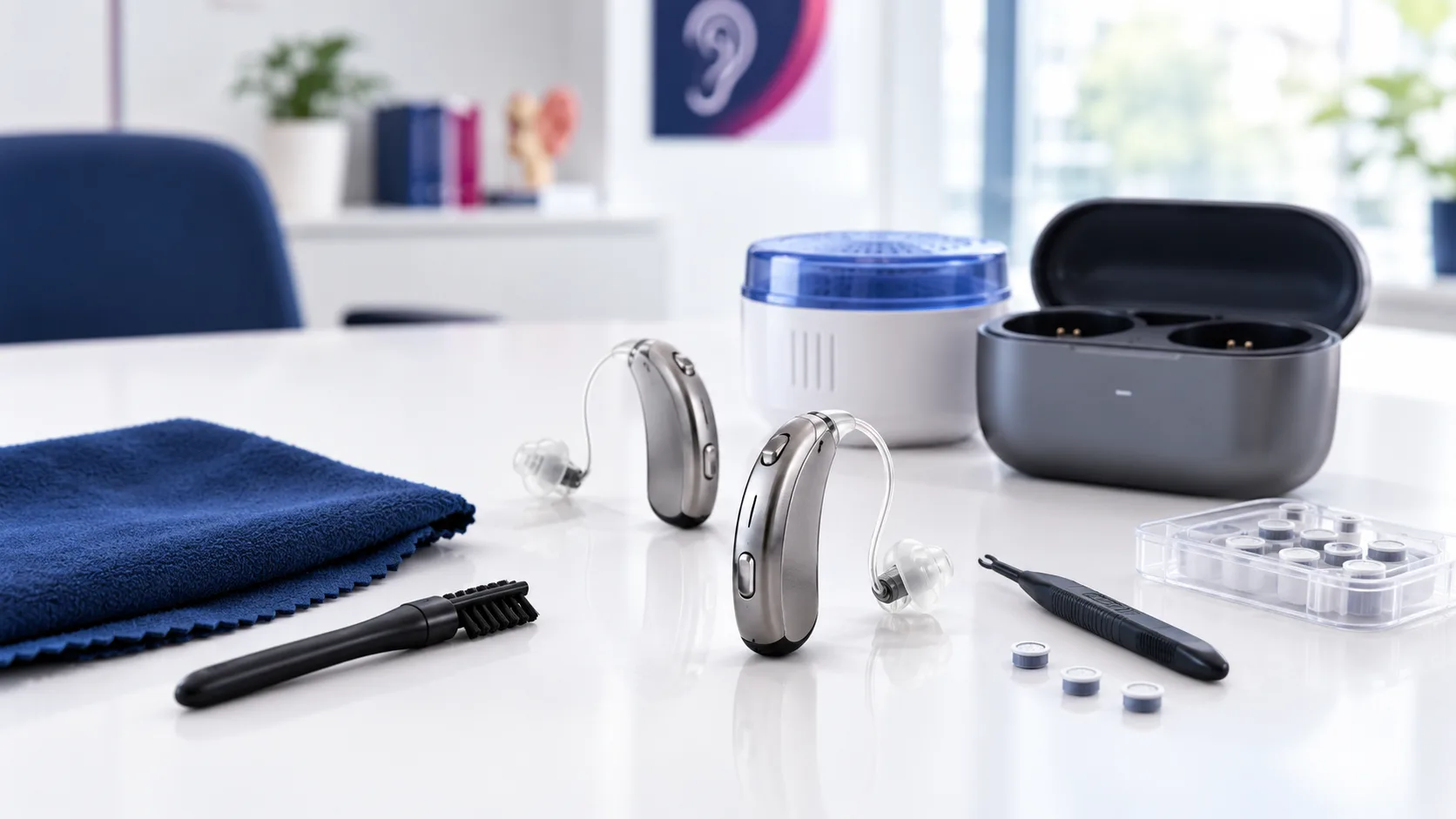
Why Regular Hearing Aid Maintenance Is Important
Hearing aids are small electronic devices that are exposed every day to earwax, moisture, dust and natural skin oils. Regular maintenance helps prevent these substances from blocking microphones, receivers and other important components. A simple cleaning routine can also help maintain clear sound quality and make the device more comfortable to wear. People using hearing aids should follow the cleaning instructions recommended for their specific model. Professional hearing aid checks can also identify issues that may not be visible during normal home cleaning.
How to Clean Hearing Aids Safely Every Day
Daily hearing aid cleaning should be gentle and should normally be carried out with a soft, dry cloth or the cleaning tools supplied with the device. Earwax around the sound outlet, microphone openings and earmould should be removed carefully without pushing debris deeper inside. Water, household cleaners and strong chemicals should not be applied directly to electronic hearing aids unless specifically recommended by the manufacturer. Cleaning the device at the end of the day allows it to remain dry and ready for the next use. Users who notice repeated wax buildup may benefit from professional cleaning and inspection.
Protect Hearing Aids From Moisture and Heat
Moisture is one of the most common environmental factors that can affect hearing aid performance. Hearing aids should generally be removed before bathing, swimming or activities where they may become excessively wet unless the device is specifically designed for that level of water exposure. After use, storing the device in a dry and ventilated location can help reduce moisture accumulation. A hearing aid drying system or dehumidifier may be useful where recommended by a hearing care professional. Devices should also be kept away from excessive heat, direct sunlight and hot enclosed spaces.
Quick Hearing Aid Care Tip
Quick Summary
Before wearing your hearing aids each morning, check the microphone openings, sound outlet and earmould for visible wax or moisture. A quick daily inspection can help you notice small problems before they begin affecting sound quality or comfort.
Battery and Charging Care for Hearing Aids
Good battery and charging habits are another important part of hearing aid maintenance. Rechargeable hearing aids should be placed correctly in their charging station and the charging contacts should be kept clean and dry. For models using disposable batteries, users should follow the battery type recommended for their hearing aid and avoid mixing old and new batteries. If a hearing aid will not be used for an extended period, follow the manufacturer's storage instructions. Unexpected battery drain or repeated charging problems may indicate that the device requires professional inspection.
When Should Hearing Aids Be Professionally Serviced?
Professional hearing aid servicing may be needed when the device produces weak sound, intermittent audio, feedback, distortion or stops working even after basic cleaning and battery checks. An audiologist or hearing care professional can inspect components, clean areas that are difficult to access and check whether the device settings remain suitable for the user. Regular follow-up appointments are also useful when hearing needs or listening environments change. For users in Pondicherry and nearby areas, consulting a qualified hearing care centre can provide personalised guidance based on the hearing aid model and individual hearing requirements.