
Brainstem Evoked Response Audiometry
Brainstem Evoked Response Audiometry (BERA / ABR) is an objective hearing assessment that records responses from the auditory nerve and brainstem after sound stimulation.
Objective Assessment
Auditory Pathway Response
Expert Audiologists
Suitable for Different Ages
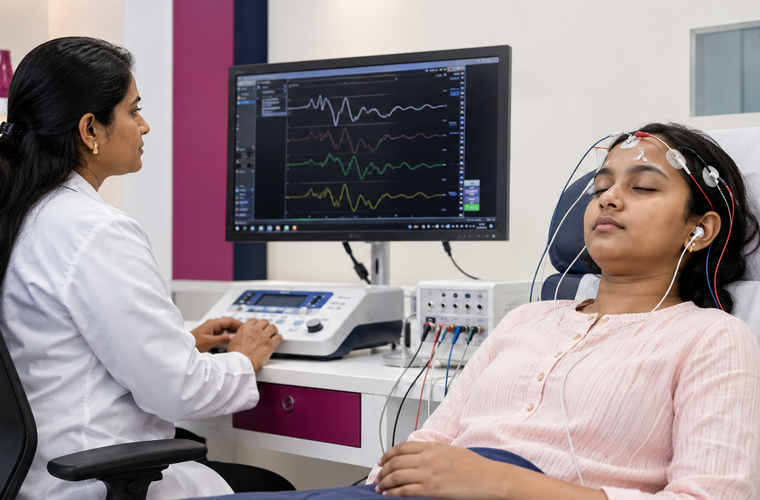
About Brainstem Evoked Response Audiometry
Brainstem Evoked Response Audiometry, commonly known as BERA or ABR, measures the electrical activity generated by the auditory system in response to sound. Small electrodes placed on the head record responses from the auditory nerve and brainstem while sounds are presented through earphones. Because the person being tested does not need to actively respond to each sound, BERA can be useful when behavioural hearing-test responses are difficult or unreliable.
How It Works
Preparation
The patient is made comfortable and small recording electrodes are gently positioned on the head and around the ears.
Sound Stimulation
Earphones are used to present controlled clicking sounds or other appropriate auditory stimuli.
Response Recording
The electrodes record tiny electrical responses produced by the auditory nerve and brainstem while the patient rests quietly.
Result Interpretation
The recorded waveforms are reviewed by the hearing-care professional and interpreted together with other relevant hearing-assessment findings.
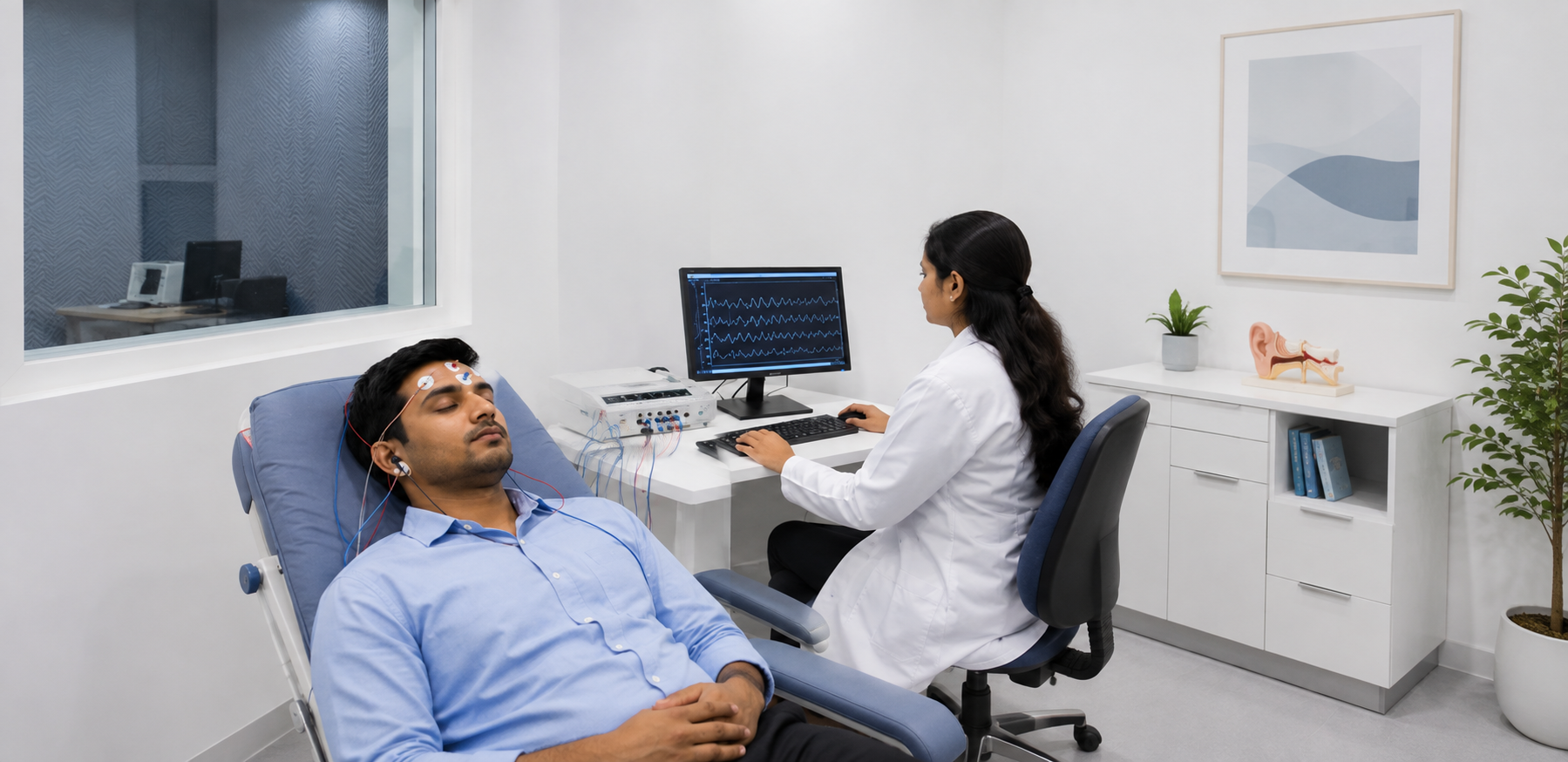
Benefits of Brainstem Evoked Response Audiometry
Objective Testing
Records physiological responses without requiring a behavioural response.
Auditory Pathway Insight
Provides information about responses from the auditory nerve and brainstem.
Useful for Infants
Can support hearing assessment when young children cannot reliably respond to normal tests.
Hearing Estimation
Can contribute to estimating hearing status when behavioural thresholds are difficult to obtain.
Clinical Guidance
Adds useful information to a comprehensive audiological assessment and follow-up plan.